
Aftermath of Tripoli clashes puts Libya’s fragile stability to the test
Nearly 15 years after Gaddafi’s fall, Libya remains split between the internationally recognised Government of National Unity in Tripoli, and the rival Government of National Stability in Benghazi. Although a truce was reached on…

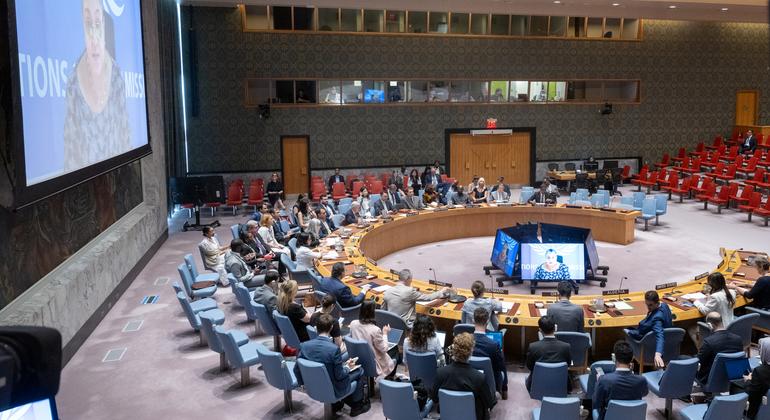
Nearly 15 years after Gaddafi’s fall, Libya remains split between the internationally recognised Government of National Unity in Tripoli, and the rival Government of National Stability in Benghazi.
Although a truce was reached on 14 May, the outbreak of fighting last month in the capital “temporarily disrupted UN development and humanitarian operations,” said top UN envoy Hanna Tetteh.
Fragile Truce
On 18 May, with support from the UN Support Mission in Libya (UNSMIL), the Presidential Council established a Truce Committee.
Composed of key security actors, the body has been mandated to monitor the upholding of the ceasefire, facilitate a permanent end to the fighting and ensure the protection of civilians.
As UNSMIL works to ease tensions and prevent further clashes, the Presidential Council has also set up a temporary Security and Military Arrangement Committee, tasked with sustaining peace and reorganising security forces in the capital.
“The truce, however, remains fragile, and the overall security situation unpredictable,” said Ms. Tetteh.
Alleged grave violations
The armed clashes that erupted in May resulted in civilian deaths and injuries, as well as damage to critical civilian infrastructure, underscoring the shortcomings of State security forces in adhering to international humanitarian and human rights law, she continued.
Ms. Tetteh expressed alarm over mass graves found in Abu Slim, citing emerging evidence of serious human rights violations – including extrajudicial killings, torture, and enforced disappearances – allegedly by State security forces.
“The presence of charred remains, unidentified bodies in morgues, and a suspected unofficial detention site at Abu Salim Zoo underscores the scale and gravity of these abuses,” she said.
Demand for change
“Many Libyans are deeply disillusioned with the prolonged transitional period and have lost confidence in the current institutions and leadership,” said Ms. Tetteh.
As civilians increasingly doubt the current leadership’s willingness to put national interests above their own, there is strong demand for a political process that allows public participation, enables elections, and delivers a democratic government with a clear mandate for real change.
UNSMIL intends to present a time-bound and politically pragmatic roadmap – with the goal of reaching the end of the transitional process – by the time of her next briefing, Ms. Tetteh told ambassadors.
“I urge all parties to engage in good faith and to be ready to forge consensus on this roadmap,” she said.
More from Geopolitics & Diplomacy Desk
Qatar’s 2030 Strategy Puts Productivity at Centre
Qatar’s next development phase is focused less on headline expansion and more on productivity, diversification and private-sector capability.
Oman Vision 2040 Seeks Quieter Path to Integration
Oman’s long-term reform agenda is drawing attention as a measured model of diversification, logistics and regional connectivity.

Synthetic drug market disrupted in Syria after regime change
Captagon, a highly addictive stimulant, has been circulating illegally from the Middle East to Africa and back with…