
Security Council voices deep concern over deadly escalation in Syria’s Sweida region
Unrest began on 12 July when mutual kidnappings escalated into armed conflict between Druze groups and Bedouin tribes, drawing in Syrian security forces. The violence spiralled, with reports of extrajudicial executions, desecration of corpses…


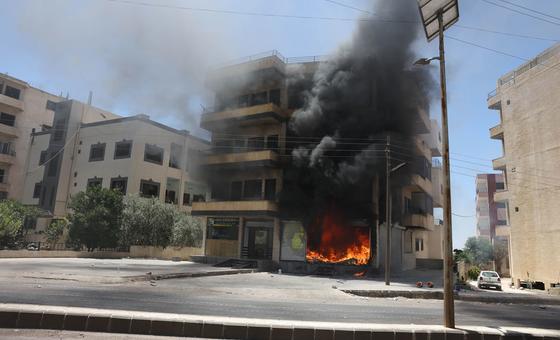
Unrest began on 12 July when mutual kidnappings escalated into armed conflict between Druze groups and Bedouin tribes, drawing in Syrian security forces.
The violence spiralled, with reports of extrajudicial executions, desecration of corpses and looting. Footage circulated widely on social media fanned sectarian tensions and disinformation.
Nearly 200,000 displaced
In a presidential statement adopted on Sunday, ambassadors said they were “deeply concerned” by the recent fighting, which has included “mass killings” and led to the internal displacement of some 192,000 people.
The Council “strongly condemns the violence perpetrated against civilians…and calls on all parties to adhere to the ceasefire arrangement and to ensure the protection of the civilian population.”
The 15-member body reminded all sides of their obligations under human rights and international humanitarian law, stressing in particular the duty to “respect and protect” all medical and humanitarian personnel.
Council members urged all parties to allow “full, safe, rapid and unhindered humanitarian access” to affected communities in the heavily-Druze Sweida area and across Syria, in line with the principles of humanity, neutrality, impartiality and independence.
They also underscored the need to ensure the humane treatment of all combatants, including those who have surrendered, are wounded, detained, or have laid down their arms.
Protection for all
The statement called on the Syrian interim authorities to protect all Syrians “regardless of ethnicity or religion” and warned that “there can be no meaningful recovery in Syria without genuine safety and protection for all Syrians.”
The Council welcomed the interim authorities’ condemnation of the violence and their commitment to investigate those responsible, but urged them to ensure “credible, swift, transparent, impartial, and comprehensive investigations… in line with international standards.”
Reaffirming resolutions including 2254 (2015), the Council reiterated its “strong commitment to the sovereignty, independence, unity, and territorial integrity of the Syrian Arab Republic” and called on all States to avoid “negative or destructive interference” that could further destabilise the country.
The statement also recalled the 1974 Disengagement Agreement and the mandate of the UN Disengagement Observer Force (UNDOF) tmonitoring and patrolling the contested Golan on the Syria-Israel border, urging all parties to abide by its terms to maintain calm.
On the threat of terrorism, the Council cited the latest report of its Analytical Support and Sanctions Monitoring Team, voicing “grave concern over the acute threat posed by foreign terrorist fighters” in Syria. It urged the country to take decisive measures against ISIL (Da’esh) and Al-Qaida, in line with relevant resolutions.
Looking ahead, the Council repeated its call for “an inclusive, Syrian-led and Syrian-owned political process” based on resolution 2254, to safeguard the rights of all Syrians and enable them to “peacefully, independently and democratically determine their futures.”
More from Geopolitics & Diplomacy Desk
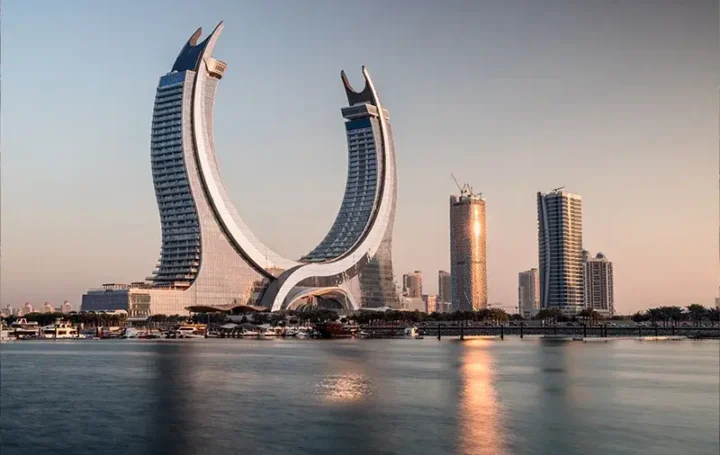
Qatar’s 2030 Strategy Puts Productivity at Centre
Qatar’s next development phase is focused less on headline expansion and more on productivity, diversification and private-sector capability.
Oman Vision 2040 Seeks Quieter Path to Integration
Oman’s long-term reform agenda is drawing attention as a measured model of diversification, logistics and regional connectivity.

Synthetic drug market disrupted in Syria after regime change
Captagon, a highly addictive stimulant, has been circulating illegally from the Middle East to Africa and back with…