
5.7 million people face food insecurity in Haiti
In its recent analysis, the IPC, a UN-backed index measuring hunger and malnutrition in global hotspots, found that 5.7 million Haitians are facing a deteriorating food security situation. The study provides an analysis for…

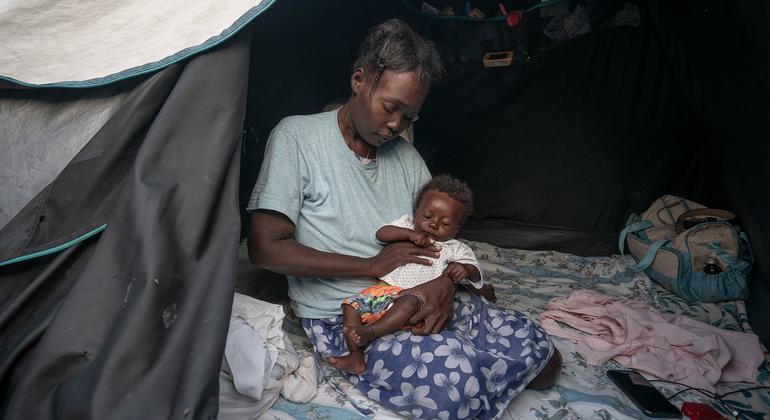
In its recent analysis, the IPC, a UN-backed index measuring hunger and malnutrition in global hotspots, found that 5.7 million Haitians are facing a deteriorating food security situation.
The study provides an analysis for the period of September 2025 until February 2026 and a projection for March until June of next year.
Emergency levels
A striking 1.9 million – or 17 per cent of the population – are suffering emergency levels of acute food insecurity, which leaves them with food gaps, high acute malnutrition and excess mortality rates.
Another 3.8 million people – or 34 per cent of the population – are facing crisis levels of acute food insecurity, meaning that they might be forced to deplete essential livelihood assets just to meet basic nutritional needs.
Conditions projected to worsen
IPC expects that food security will deteriorate further from March to June 2026 in connection with the lean season, a period between harvests when food supply tends to be low and prices, high.
Over half of the population – 54 per cent – is projected to face high levels of acute food insecurity.
The situation is worsened by armed groups’ creeping control of territory and the country’s declining economy, which has led to mass displacement and the destruction of livelihoods.
In regions controlled by armed groups, farmers who have managed to still carry out agricultural activity are forced not only to negotiate access to plots of land but also to share their produce, says IPC.
Additionally, households in gang-occupied regions that relied on small businesses have been forced to abandon their sources of income and many people have lost their jobs following business closures.
Emergency intervention needed
Despite the support of humanitarian actors, Haitians face overcrowding, characterised by precarious living conditions and a lack of sanitation facilities, according to the IPC.
This increases the likelihood of sexual violence, spread of diseases such as cholera, and psychological distress for the displaced, who already lack adequate access to safe water, food and proper healthcare.
To alleviate the crisis, IPC recommends an emergency intervention to prevent the poorest households from resorting to harmful coping strategies and an expansion of already existing social protection programmes, among other actions.
More from Geopolitics & Diplomacy Desk

Qatar’s 2030 Strategy Puts Productivity at Centre
Qatar’s next development phase is focused less on headline expansion and more on productivity, diversification and private-sector capability.

Oman Vision 2040 Seeks Quieter Path to Integration
Oman’s long-term reform agenda is drawing attention as a measured model of diversification, logistics and regional connectivity.

Synthetic drug market disrupted in Syria after regime change
Captagon, a highly addictive stimulant, has been circulating illegally from the Middle East to Africa and back with…