
Half of Jamaica’s population reeling from Hurricane Melissa
More than 130 roads were blocked, power and communication networks disrupted, while health services remain under heavy strain, according to the UN aid coordination office (OCHA). “Up to 360,000 people may require food assistance”,…

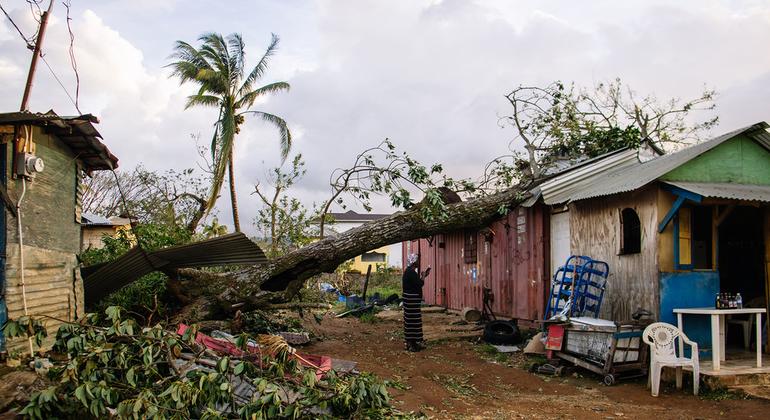
More than 130 roads were blocked, power and communication networks disrupted, while health services remain under heavy strain, according to the UN aid coordination office (OCHA).
“Up to 360,000 people may require food assistance”, underscored the World Food Programme (WFP). Access to some western parishes continue to be difficult due to debris and fuel shortages, OCHA said.
WFP has been “working around the clock”, developing joint plans and strategies with the Government, said Brian Bogart, Country Director for WFP Multi-Country Caribbean Office, briefing journalists in New York via video link.
Jamaican resilience
“The Jamaican people are resilient”, he said, “but they need urgent support to maintain that resilience.
Mr. Bogart reiterated that urgent needs remain food, water, shelter, and medicine for communities which have been hardest hit.
In the past two days, both a French and a Dutch navy vessel loaded with relief items have made landfall in Kingston’s harbour.
In the days ahead, WFP is planning to assist up to 200,000 people across the country with food assistance and cash transfers, which is critical as the country moves from an immediate humanitarian response to a longer-term recovery strategy.
Cuba and Haiti
Food distribution in Cuba has already reached 180,000 in protection centres across the provinces of Granma, Santiago de Cuba, and Guantanamo, reported WFP Country Director there, Etienne Labande.
Highlighting the UN food agencies’ deep understanding of the local context and their ability to coordinate with authorities and communities, M. Labande emphasised that having WFP on the ground was “critical” for ensuring a fast and effective response.
Meanwhile, in Haiti, at least 30 people died during the extreme weather generated by Melissa, according to the authorities.
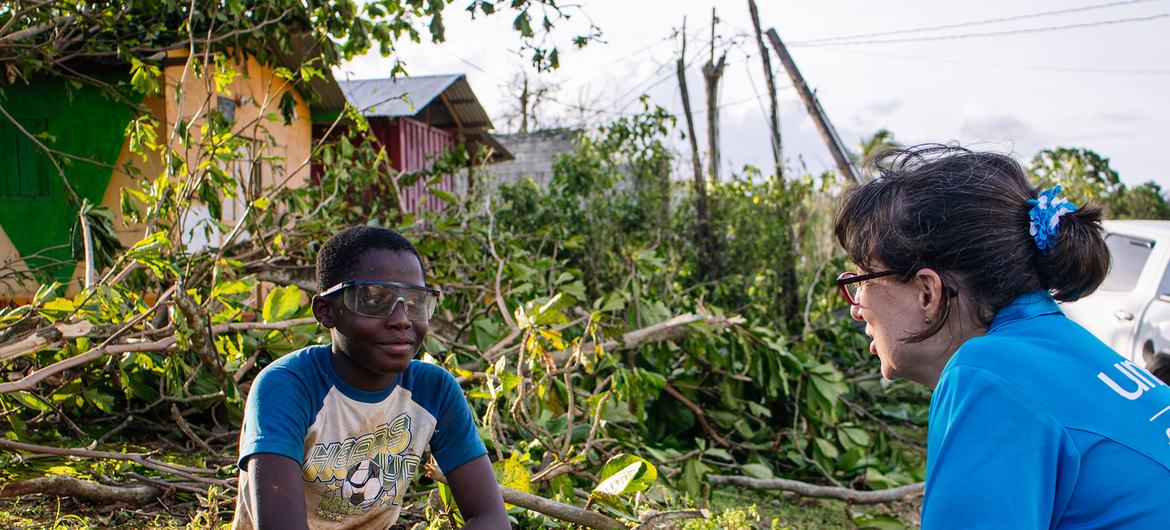
A boy receives support from a UNICEF worker in St. Elizabeth, Jamaica.
“An estimated 1.25 million people have been affected by the hurricane”, said the Cuba country director.
To make matters worse, relief efforts and the delivery of ongoing aid are further complicated by the continuing humanitarian crisis and security vacuum created by armed groups who control the vast majority of the capital, Port au Prince.
“Recovery is a marathon, not a sprint”, underscored M Labande.
Despite severe funding shortages, access challenges and logistical constraints, the UN and partners are continuing to assess damage and ramping up efforts to reach people in need.
$74 million is urgently needed to deliver life-saving assistance to up to 1.1 million people across the Caribbean in the wake of Melissa, and coordinate emergency logistics and telecommunications.
More from Geopolitics & Diplomacy Desk

Qatar’s 2030 Strategy Puts Productivity at Centre
Qatar’s next development phase is focused less on headline expansion and more on productivity, diversification and private-sector capability.

Oman Vision 2040 Seeks Quieter Path to Integration
Oman’s long-term reform agenda is drawing attention as a measured model of diversification, logistics and regional connectivity.

Synthetic drug market disrupted in Syria after regime change
Captagon, a highly addictive stimulant, has been circulating illegally from the Middle East to Africa and back with…