
Middle East investors should pivot to emerging markets and gold amid weak dollar: Standard Chartered
Investors in the Middle East should rebalance their portfolios to make the most of a weak dollar, according to a Standard Chartered report. Standard Chartered has released its Global Market Outlook for H2 2025,…

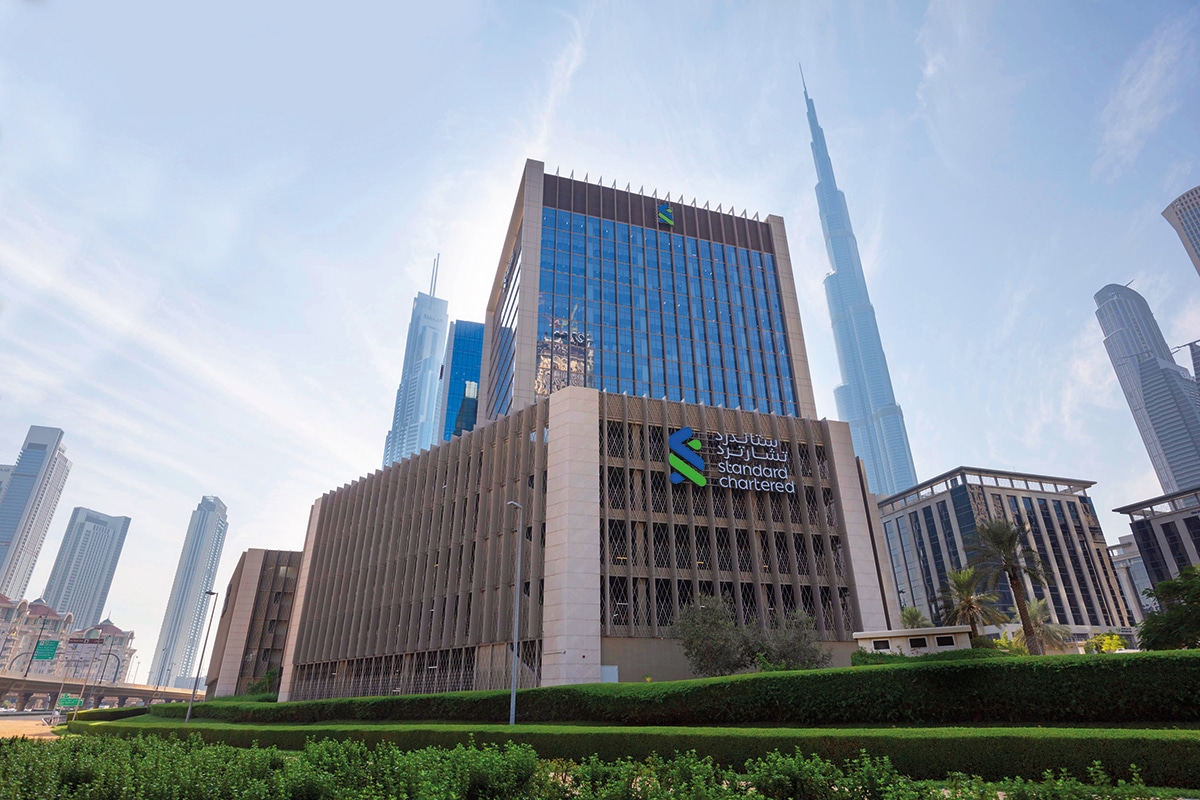
Investors in the Middle East should rebalance their portfolios to make the most of a weak dollar, according to a Standard Chartered report.
Standard Chartered has released its Global Market Outlook for H2 2025, projecting a “constructive but volatile” investment landscape, with Middle East investors well-placed to benefit from a weaker US dollar, resilient equity markets, and renewed momentum in emerging markets.
The bank’s report anticipates a softening US dollar over the next six to 12 months, and has upgraded Asia (ex-Japan) equities and Emerging Market (EM) local-currency bonds to Overweight.
Standard Chartered investment report
Global equities also remain favoured across portfolios, supported by healthy earnings, easing trade tensions and controlled inflation.
Key takeaways for Middle East investors:
- Emerging markets offer strong return potential in a weak-dollar environment
- Gold is a core allocation, driven by central bank demand and diversification benefits
- 5–7 year USD-denominated bonds are preferred for risk-adjusted returns
- Developed Market Investment Grade corporate bonds downgraded to Underweight due to compressed yields and limited upside
Ayesha Abbas, Managing Director and Head of Affluent and Wealth Solutions, Europe, Middle East and Africa, and UAE at Standard Chartered, said: “As global markets transition into a new phase, Middle East investors are well-positioned to capitalise on emerging opportunities. A weaker dollar historically supports returns across risk assets, particularly in emerging markets, which have long been core components of regional portfolios.
“This outlook underscores a critical moment for investors in the region. As the global environment adjusts to weak dollar dynamics, shifting trade policies, and diverging central bank actions, investors in the Middle East have an opportunity to reposition portfolios with greater international diversification.
“Asset classes such as emerging market bonds and equities across major regions (including non-US equities) are well-placed to help investors navigate volatility, capture income, and enhance portfolio resilience in today’s shifting landscape.”
Alternative investments are also in focus, with the Bank highlighting gold as a core allocation, supported by strong central bank demand and its role as a diversifier when bonds offer less downside protection.
As macroeconomic dynamics evolve — including fiscal support in Europe, stabilisation in China, and continued strength in India and ASEAN — Standard Chartered advises investors to adapt proactively to shifting trade policies, diverging central bank actions, and volatile currency trends.
More from Capital & Sovereign Wealth Desk
Saudi Logistics Plan Moves From Strategy to Capacity
Saudi Arabia’s logistics agenda is becoming a national competitiveness test as the kingdom works to connect ports, airports,…
India–GCC FTA Talks Put Trade Corridor in Focus
India and the GCC have moved from strong trade flows to a more formal negotiation over rules, services,…

Gulf Wealth Funds Take Wider Role in National Strategy
Sovereign investors across the Gulf are increasingly operating as instruments of industrial policy, global capital influence and domestic…