
At UN, Colombian President Petro slams global inaction, calls for urgent reform
President Petro opened by recalling that in his first speech to the Assembly he warned of conflicts in Ukraine and Gaza, and proposed a peace conference. But he argued that over the intervening years,…

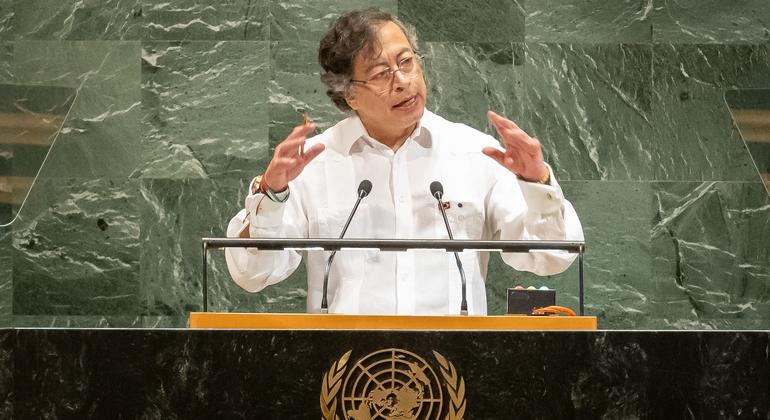
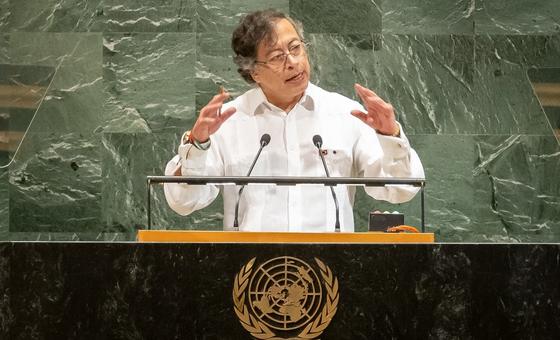
President Petro opened by recalling that in his first speech to the Assembly he warned of conflicts in Ukraine and Gaza, and proposed a peace conference. But he argued that over the intervening years, the “horrific situation” in Palestine and elsewhere have proven how unprepared the world was.
“Perhaps a global stone age has descended on all of humankind,” he said, noting that powerful nations use violence and pointed to attacks against unarmed youth in the Colombian Caribbean region and the deaths of tens of thousands in Gaza.
Stating that the General Assembly is “mute witness to genocide,” he called for decisive action: “First and foremost, we need to stop the genocide in Gaza. Humanity cannot allow a single day or more of this.”
On migration, Mr. Petro condemned the mass expulsion and persecution of migrants, saying migration has become a tool for nations to assert dominance, rather than address root causes. He linked climate inaction, inequity and war, saying all stem from the same global structures that privilege wealth.
He also claimed his government has rejected violent eradication of coca crops used in drug policy and instead pushed for voluntary substitution, saying the expansion of coca dropped sharply, from 43 per cent to 3 per cent.
The Colombian President also challenged the United Nations system, especially its asymmetries, such as how decisions are made in the Security Council and how foreign policy can be influenced by powerful states’ interests – even when they clash with human rights or peace.
Mr. Petro concluded by calling for a global renewal of solidarity: a world where the vulnerable are protected, migration is managed as a human right, and no society can claim superiority.
More from Geopolitics & Diplomacy Desk

Qatar’s 2030 Strategy Puts Productivity at Centre
Qatar’s next development phase is focused less on headline expansion and more on productivity, diversification and private-sector capability.
Oman Vision 2040 Seeks Quieter Path to Integration
Oman’s long-term reform agenda is drawing attention as a measured model of diversification, logistics and regional connectivity.

Synthetic drug market disrupted in Syria after regime change
Captagon, a highly addictive stimulant, has been circulating illegally from the Middle East to Africa and back with…