
Gaza: Humanitarian response scaled up amid faltering ceasefire
In a press briefing on Tuesday, UN Spokesperson Stéphane Dujarric described reports of Israeli military action as “extremely concerning,” stressing that “we don’t want civilians to be bombed again” or humanitarian operations “derailed again.”…

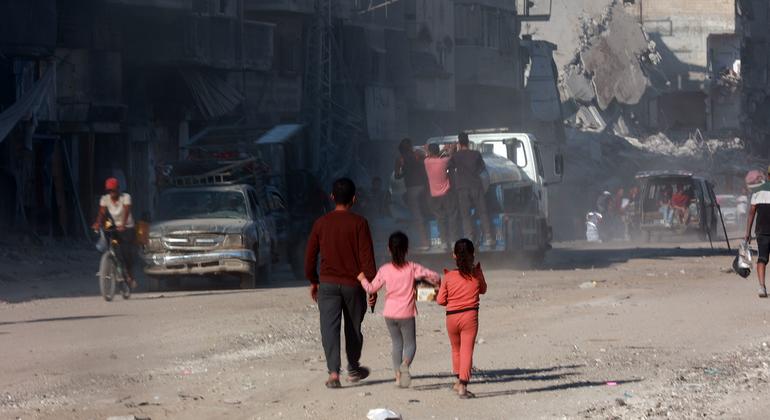
In a press briefing on Tuesday, UN Spokesperson Stéphane Dujarric described reports of Israeli military action as “extremely concerning,” stressing that “we don’t want civilians to be bombed again” or humanitarian operations “derailed again.”
Hamas denied that it had any involvement in a reported attack on Israeli forces by Palestinian militants earlier in the day, saying that it remained committed to the ceasefire – accusing Israel of violating its terms.
Response plan continues
The UN relief coordination office, OCHA, said that partners are scaling up efforts under a 60-day response plan.
“UN partners providing water and sanitation report that water distribution is expanding in northern Gaza, where they are now able to deliver 4,600 cubic metres daily in 585 different locations across the governorates of Gaza and North Gaza,” Mr. Dujarric said.
Preparation for the rainy season is underway in Deir al Balah, Khan Younis and Gaza governorates, including clearing stormwater drainage systems.
Nutrition programmes between 1 and 25 October treated more than 4,300 acutely malnourished pregnant and breastfeeding women, while preventive support reached over 134,000 mothers and children under five.
Meanwhile, Gazans continue efforts to relocate, many seeking just to return to shattered homes.
“More than 480,000 movements from southern to northern Gaza have been observed since the onset of the ceasefire, while nearly 100,500 movements from western to eastern Khan Younis have also been observed,” Mr. Dujarric said.
“To mitigate exposure to the elements, our partners are helping displaced communities repurpose flour and rice bags – originally distributed as food aid, obviously – into repurpose those into sandbags to reinforce shelters and provide protection against rain and wind,” he added.
Aid delays
Efforts to collect humanitarian cargo from Gaza’s crossings are ongoing.
However, aid deliveries are facing delays due to a rerouting of humanitarian and commercial trucks by Israeli authorities.
“In response to the rerouting, several agencies have temporarily reduced the number of trucks in their convoys pending an initial assessment of the road conditions,” Mr. Dujarric said.
“Teams have also already reported congestion and heavy traffic along the new route, leading to delays in aid cargo movements,” he added, noting that UN continues to engage with Israeli authorities and others to address the slowdown.
Meanwhile, reports from Israeli NGO Peace Now, cited by the UN rights office (OHCHR), indicate an increase in settler activity: 84 new outposts were established over the past year, compared to 49 the year before, alongside 757 recorded settler attacks in the first half of 2025.
More from Geopolitics & Diplomacy Desk

Qatar’s 2030 Strategy Puts Productivity at Centre
Qatar’s next development phase is focused less on headline expansion and more on productivity, diversification and private-sector capability.

Oman Vision 2040 Seeks Quieter Path to Integration
Oman’s long-term reform agenda is drawing attention as a measured model of diversification, logistics and regional connectivity.

Synthetic drug market disrupted in Syria after regime change
Captagon, a highly addictive stimulant, has been circulating illegally from the Middle East to Africa and back with…