
Just 1.5 per cent of Gaza’s agricultural land remains accessible and undamaged
A new report from the Food and Agriculture Organization (FAO) and the UN Satellite Centre (UNOSAT) reveals that just 8.6 percent of cropland in Gaza is still accessible, while only 1.5 per cent of…


A new report from the Food and Agriculture Organization (FAO) and the UN Satellite Centre (UNOSAT) reveals that just 8.6 percent of cropland in Gaza is still accessible, while only 1.5 per cent of cropland is both accessible and undamaged, as of 28 July.
More than 86 per cent of cropland is damaged, while 12.4 per cent is undamaged but out of reach, as fighting between Israeli forces and militants from Hamas and other armed groups continues.
Ongoing starvation
This report comes as Israel’s offensive inside Gaza continues to restrict aid distribution – and starvation-related deaths rise.
The local Ministry of Health reported five new malnutrition-related deaths in the past 24 hours on Wednesday, bringing the total to almost 200 starvation-related deaths, half of whom are children.
Healthcare collapse
According to the UN aid coordination office (OCHA), hospitals are overstretched with many patients reduced to lying on the floor or in the streets.
This mass suffering is due to the lack of beds, medical supplies and equipment. Yet, emergency medical teams were again denied entry into Gaza on Tuesday.
The World Health Organization (WHO) also reported that more than 100 health professionals, such as surgeons and other specialized medical staff, have been barred from entering the enclave since March.
Meanwhile, the limited availability of fuel continues to restrict lifesaving operations. The UN has collected around 300,000 litres from the Kerem Shalom crossing in the past two days, but this is far less than what is needed.
Due to the lack of fuel, UN health partners report that more than 100 premature babies are in imminent danger.
Renewed displacement orders
Additionally, the Israeli military on Wednesday renewed two displacement orders spanning five neighbourhoods in Gaza and Khan Younis governorates.
Shelter materials have not been allowed to enter Gaza since 2 March when Israel withdrew from the ceasefire deal, and the few materials available on the local market are extremely expensive and limited in quantity, making them inaccessible to most families.
Entry of commercial goods
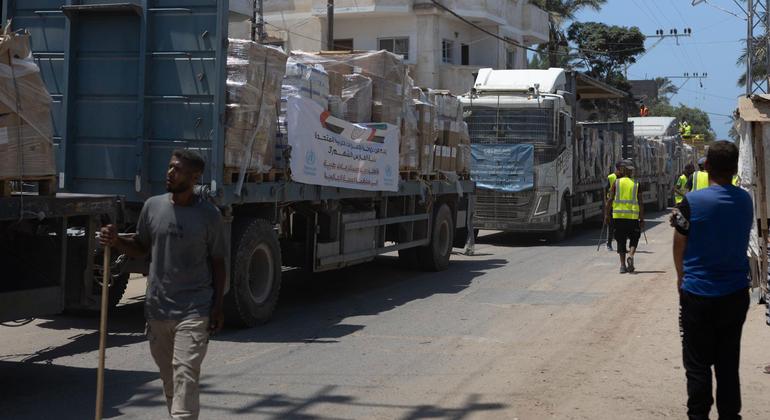
On Tuesday, Israeli authorities reportedly allowed the entry of a limited number of trucks carrying commercial goods, including rice, sugar and vegetable oil – but the UN is still seeking more clarity on the situation.
Sugar remains one of the most expensive items on the market, with a two-ounce bag costing some $170. Eggs, poultry and meat have completely disappeared from marketplaces, forcing families to rely on pulses and bread to survive.
At Wednesday’s daily briefing in New York, UN Deputy Spokesperson Farhan Haq stressed that “the worsening market situation underscores the urgent need for the entry of humanitarian aid and commercial goods at scale – and consistently.”
More from Geopolitics & Diplomacy Desk

Qatar’s 2030 Strategy Puts Productivity at Centre
Qatar’s next development phase is focused less on headline expansion and more on productivity, diversification and private-sector capability.

Oman Vision 2040 Seeks Quieter Path to Integration
Oman’s long-term reform agenda is drawing attention as a measured model of diversification, logistics and regional connectivity.

Synthetic drug market disrupted in Syria after regime change
Captagon, a highly addictive stimulant, has been circulating illegally from the Middle East to Africa and back with…