
Pakistan’s Prime Minister warns of regional tensions, calls for ceasefire in Gaza
“Our world is more complex today than ever before,” Mr. Sharif said, citing intensifying conflicts, violations of international law, and a climate crisis that “threatens our very survival.” Multilateralism, he argued, was “no more…

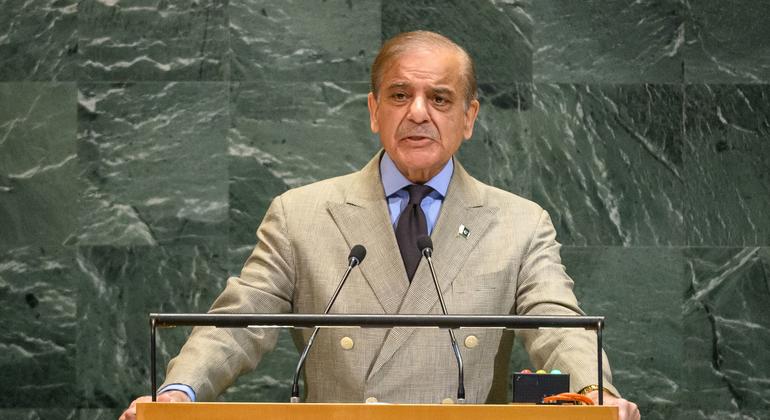
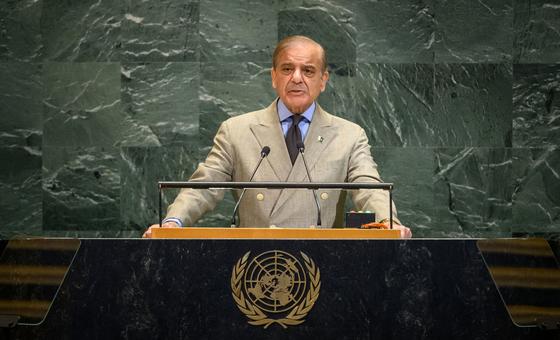
“Our world is more complex today than ever before,” Mr. Sharif said, citing intensifying conflicts, violations of international law, and a climate crisis that “threatens our very survival.”
Multilateralism, he argued, was “no more an option – it is need of the hour.”
Prime Minister Sharif said that his country faced “unprovoked aggression” by India earlier this year.
Pakistan’s armed forces had repelled the attack with “stunning professionalism, bravery and acumen,” shooting down several Indian aircraft, he added. He praised US President Donald Trump for helping secure a ceasefire.
Dialogue with India
At the same time, Mr. Sharif also offered dialogue.
“Pakistan stands ready for a composite, comprehensive and result-oriented dialogue with India on all outstanding issues,” he said, warning that disputes over Kashmir and water resources remained volatile.
India’s alleged abeyance of the Indus Water Treaty, he added, “represents an act of war.”
Mr. Sharif pledged support for Kashmiris, saying Pakistan would “ardently defend” their rights and reiterated calls for a UN-supervised plebiscite.
“One day soon, inshallah [God willing], India’s tyranny in Kashmir will come to a grinding halt. They will gain its fundamental right to self-determination through an impartial plebiscite under the auspices of the United Nations,” he said.
Call for ceasefire in Gaza
On the Middle East, the Pakistani leader condemned what he called Israel’s “genocidal onslaught” in Gaza, describing the plight of Palestinian children as “one of the most heart-wrenching tragedies of our times.”
He called for an immediate ceasefire and reaffirmed Pakistan’s backing for an independent Palestinian state within pre-1967 borders, with Jerusalem as its capital.
“Palestine can no longer remain under Israeli shackles. It must be liberated,” he declared.
The Pakistani leader also addressed broader global issues, including Russia’s ongoing invasion of Ukraine, where he voiced support for a peaceful resolution in line with the UN Charter.
On terrorism, he recalled Pakistan’s sacrifices, saying the country had lost 90,000 lives and $150 billion to extremist violence over two decades.
Mr. Sharif further described climate change as an existential challenge, pointing to recent catastrophic floods that displaced millions and caused tens of billions in losses. Despite being responsible for “less than one per cent of global emissions.”
Pakistan was bearing a disproportionate burden, he said, calling it “not fairness, not equality, not justice.”
Closing his address, Mr. Sharif vowed Pakistan would continue to stand for “peace, justice and development” through multilateral cooperation.
“Let this 80th anniversary not simply commemorate history,” he said. “Let us make history and chart a future for the next eight years, with these United Nations as enduring hope for look for global good.”
More from Geopolitics & Diplomacy Desk
Qatar’s 2030 Strategy Puts Productivity at Centre
Qatar’s next development phase is focused less on headline expansion and more on productivity, diversification and private-sector capability.

Oman Vision 2040 Seeks Quieter Path to Integration
Oman’s long-term reform agenda is drawing attention as a measured model of diversification, logistics and regional connectivity.

Synthetic drug market disrupted in Syria after regime change
Captagon, a highly addictive stimulant, has been circulating illegally from the Middle East to Africa and back with…