
Sudan: Humanitarian needs deepen amid rising hostilities and heavy rains
Nearly 27 months have passed since fighting broke out between the Sudanese Armed Forces (SAF) and a former ally, the paramilitary Rapid Security Forces (RSF), creating an unprecedented humanitarian crisis. The UN voiced grave…

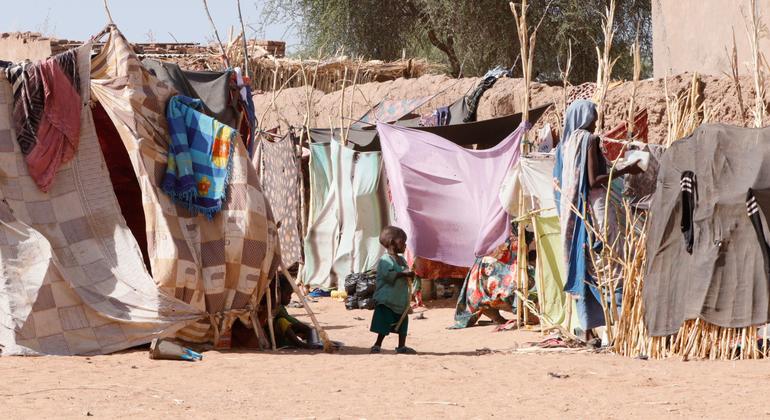
Nearly 27 months have passed since fighting broke out between the Sudanese Armed Forces (SAF) and a former ally, the paramilitary Rapid Security Forces (RSF), creating an unprecedented humanitarian crisis.
The UN voiced grave alarm over escalating hostilities in El Fasher, the besieged capital of North Darfur state.
Serious risk of renewed violence
Large numbers of RSF fighters reportedly entered the city on Friday for the first time since the siege began over a year ago.
Local sources report that recent fierce fighting, particularly in the southwest and east of El Fasher, has led to civilian casualties.
“The situation remains highly volatile and unpredictable, with a serious risk of renewed violence, as well as further displacement and disruption of humanitarian operations – which are already under severe strain,” OCHA said.
Insecurity in North Kordofan state
Meanwhile, in North Kordofan State, growing insecurity forced 3,400 people to flee their homes over the weekend, according to the UN International Organization for Migration (IOM).
Local reports indicate that at least 18 civilians were killed, and homes were burned in several villages.
OCHA reminded all parties that attacks on civilians and civilian infrastructure are prohibited under international humanitarian law, and that civilians must be protected at all times.
Rainy season constraints
Meanwhile, heavy rains have been reported in West and Central Darfur states, which may affect road conditions in some locations and worsen the challenges humanitarians are already facing in accessing people in need.
“With the rainy season continuing through October, the risk of floods, access constraints and disease outbreaks is growing – especially during this critical lean season, a time between harvests when food stocks traditionally run low,” OCHA warned.
Families return to West Darfur
The agency said that despite the crisis, signs of small-scale returns are visible in West Darfur state, where displaced families have been returning from Chad to three localities – Sirba, Jebel Moon and Kulbus – to cultivate their farms.
Furthermore, local authorities report about 40 people returning daily to Kulbus, with 300 arriving over the past week.
OCHA urged all parties to enable safe and unimpeded access to all people in need across Sudan, and for donors to step up their support.
Some 30 million people nationwide – more than half the population – need vital aid and protection this year.
More from Geopolitics & Diplomacy Desk

Qatar’s 2030 Strategy Puts Productivity at Centre
Qatar’s next development phase is focused less on headline expansion and more on productivity, diversification and private-sector capability.

Oman Vision 2040 Seeks Quieter Path to Integration
Oman’s long-term reform agenda is drawing attention as a measured model of diversification, logistics and regional connectivity.

Synthetic drug market disrupted in Syria after regime change
Captagon, a highly addictive stimulant, has been circulating illegally from the Middle East to Africa and back with…