
Syria: Ceasefire under strain as violence and aid access issues persist in Sweida
The 19 July truce followed weeks of sectarian clashes, Israeli airstrikes and grave human rights violations in the southern governorate, also known as As-Sweida. As a result, more than 190,000 people have been displaced…

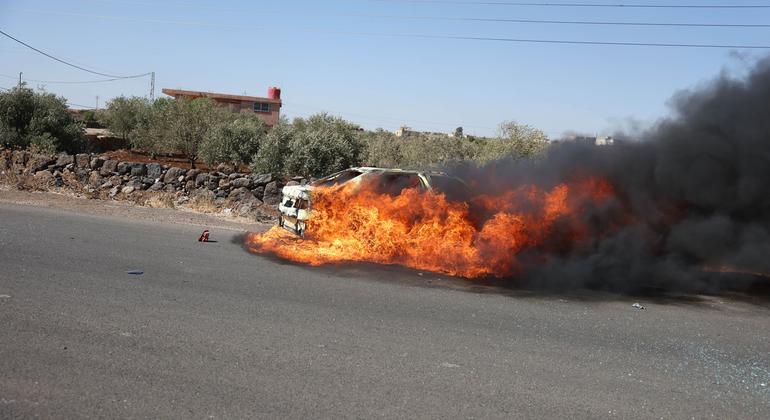
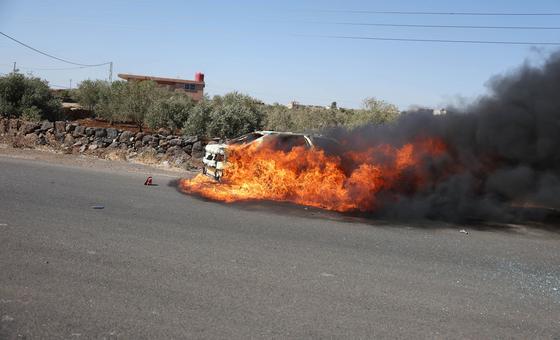
The 19 July truce followed weeks of sectarian clashes, Israeli airstrikes and grave human rights violations in the southern governorate, also known as As-Sweida.
As a result, more than 190,000 people have been displaced there and in neighbouring Dar’a and Rural Damascus governorates.
The fighting also caused severe damage to infrastructure and to livelihoods. Electricity networks, water production assets including wells, and key public facilities were impacted.
Volatility, surveillance and demonstrations
Between 1 and 5 August, the security situation in Sweida and surrounding areas remained volatile, with clashes reported in three places, according to the OCHA flash update.
“Additionally, aerial surveillance activity attributed to the Israeli Defence Forces (IDF) has been observed over multiple locations in Dar’a and As-Sweida, contributing to regional tension,” the agency said.
During the same period, public demonstrations occurred across multiple locations in Sweida, reiterating calls for improved humanitarian access and protection.
Parallel demonstrations also took place in Dar’a and Damascus governorates which emphasised the importance of national unity.
Aid efforts continue
Humanitarian access remains constrained, OCHA said, as the UN and partners continue to support response efforts.
The main highway between Sweida and the capital, Damascus, has been inaccessible since 12 July due to security concerns.
Furthermore, the southern corridor via Busra Esh-Sham in eastern Dar’a was temporarily closed for 24 hours but reopened on Monday, affecting aid delivery.
“Humanitarian actors scaled up response efforts, including fuel and food deliveries to As-Sweida and Dar’a, commercial convoy facilitation, and shelter support for displaced populations,” OCHA said.
Inter-agency mission
Since the escalation of hostilities, humanitarians have provided bread assistance to nearly 1.5 million people.
OCHA also led an inter-agency mission to Dar’a to assess shelter conditions and to discuss medium-term housing options for displaced people.
Meanwhile, restoration of essential services is ongoing in Sweida, with partial electricity restored through emergency repairs.
However widespread telecommunication and internet outages persist across the governorate, and maintenance of water and power networks continues in rural areas.
More from Geopolitics & Diplomacy Desk

Qatar’s 2030 Strategy Puts Productivity at Centre
Qatar’s next development phase is focused less on headline expansion and more on productivity, diversification and private-sector capability.
Oman Vision 2040 Seeks Quieter Path to Integration
Oman’s long-term reform agenda is drawing attention as a measured model of diversification, logistics and regional connectivity.

Synthetic drug market disrupted in Syria after regime change
Captagon, a highly addictive stimulant, has been circulating illegally from the Middle East to Africa and back with…