
Syria’s search for truth is a ‘collective effort’, top UN investigator says
The Independent Institution on Missing Persons in Syria (IIMP), headed by Karla Quintana, was created to address one of the conflict’s most painful legacies, the widespread and ongoing disappearances affecting nearly every family in…

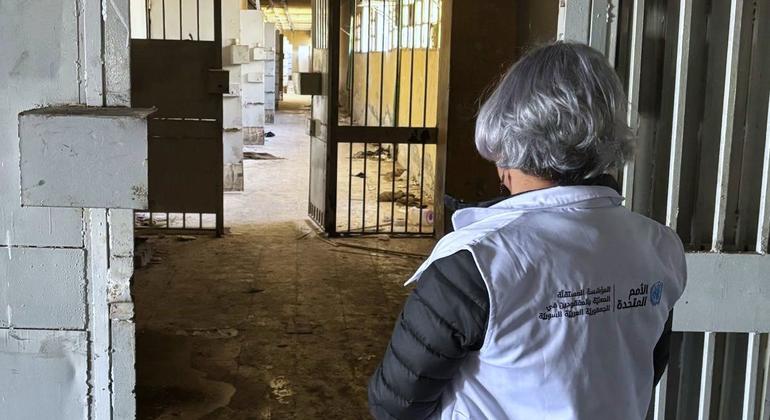
The Independent Institution on Missing Persons in Syria (IIMP), headed by Karla Quintana, was created to address one of the conflict’s most painful legacies, the widespread and ongoing disappearances affecting nearly every family in the country.
At a press conference in UN Headquarters in New York on Wednesday, Ms. Quintana warned that time is running out to find the hundreds of thousands who disappeared during decades of brutality, oppression and forced disappearances.
“The crisis of the missing in Syria affects not only hundreds of thousands of families, but entire communities on the whole Syrian society. Confronting this requires mobilizing every available skill, resource, and capacity.”
The UN official said the foundation she heads was born out of Syrian families’ insistence on finding out the truth about what happened to their loved ones and their conviction that some will reemerge.
Collective effort
“Everyone in Syria knows someone who has gone missing,” Ms. Quintana emphasised, adding that no one can take on the urgent task alone.
“No one can morally bear the responsibility of failing to use all that is ready and available to use in Syria. Time is of essence and comparative experience should be taken into consideration.”
A path toward justice
In an interview this week with UN News, the Assistant Secretary-General – who took office last December – underscored that the search must be Syrian-led and internationally supported, driven by the families who have long fought to learn the truth about their loved ones; and expressed her particular admiration for the strength being shown by Syrian women.
“Clarifying the fate of the missing is not only a matter of personal closure, but also a cornerstone of Syria’s path toward justice, reconciliation and reform”, she told us.
Listen to the full podcast here:
More from Geopolitics & Diplomacy Desk

Qatar’s 2030 Strategy Puts Productivity at Centre
Qatar’s next development phase is focused less on headline expansion and more on productivity, diversification and private-sector capability.
Oman Vision 2040 Seeks Quieter Path to Integration
Oman’s long-term reform agenda is drawing attention as a measured model of diversification, logistics and regional connectivity.

Synthetic drug market disrupted in Syria after regime change
Captagon, a highly addictive stimulant, has been circulating illegally from the Middle East to Africa and back with…