
The descent into ‘a massive famine’ in Gaza has begun, relief agencies warn
Although the private aid platform run by the US and Israeli-backed Gaza Humanitarian Foundation continues to receive its own supplies, “we are on a descent into a massive famine”, insisted Jens Laerke, spokesperson for…

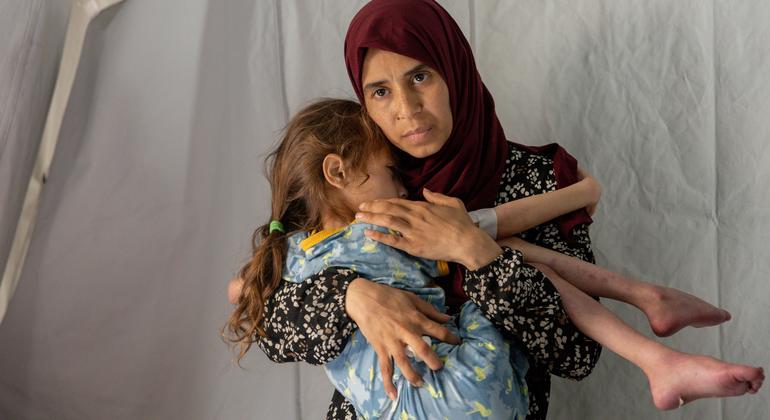
Although the private aid platform run by the US and Israeli-backed Gaza Humanitarian Foundation continues to receive its own supplies, “we are on a descent into a massive famine”, insisted Jens Laerke, spokesperson for the UN aid coordination office, OCHA, on Friday.
Referring to the latest catastrophic assessment of food insecurity in Gaza from the UN-backed IPC group of experts, Mr. Laerke noted that 500,000 people are in the worst possible situation today, with another 160,000 expected to be added to that number in the coming weeks.
Everyone lacks food
“They all need food,” he told journalists in Geneva. “The entire Gaza Strip needs food. There would not have been declared famine had there been sufficient amounts of food.”
In a related development, the UN World Health Organization (WHO) highlighted the growing risk of communicable diseases in Gaza, with 94 suspected cases of Guillain-Barré Syndrome now reported.
The disease can cause paralysis and is treatable in hospital with intravenous immunoglobulin or plasma exchange, according to WHO. “But these two [treatments] are at zero stock, as are anti-inflammatories,” said WHO spokesperson Christian Lindmeier, referencing ongoing Israeli aid restrictions impacting humanitarian relief supplies entering Gaza. “These deliveries must be urgently expedited as much as surveillance and testing capabilities.”
Between 20 and 26 August, out of 89 attempts to coordinate relief missions with Israeli authorities across Gaza, 53 were facilitated, 23 were initially approved but then impeded on the ground, seven were denied and six had to be withdrawn by the organizers, OCHA said in an update.
More to come on this developing story…
More from Geopolitics & Diplomacy Desk

Qatar’s 2030 Strategy Puts Productivity at Centre
Qatar’s next development phase is focused less on headline expansion and more on productivity, diversification and private-sector capability.

Oman Vision 2040 Seeks Quieter Path to Integration
Oman’s long-term reform agenda is drawing attention as a measured model of diversification, logistics and regional connectivity.

Synthetic drug market disrupted in Syria after regime change
Captagon, a highly addictive stimulant, has been circulating illegally from the Middle East to Africa and back with…