
Two ex-militia leaders in Central African Republic sentenced for war crimes, crimes against humanity
Alfred Yekatom and Patrice-Edouard Ngaïssona received prison sentences of 15 and 12 years for their roles in brutal attacks against civilians – primarily from the country’s mainly Muslim Seleka population – during the 2013-14…

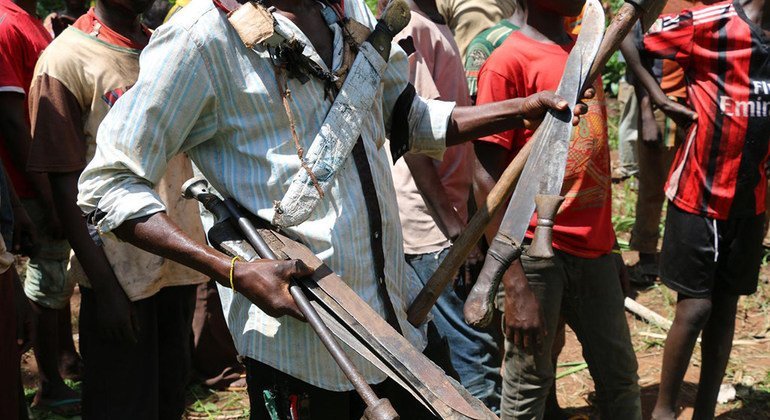
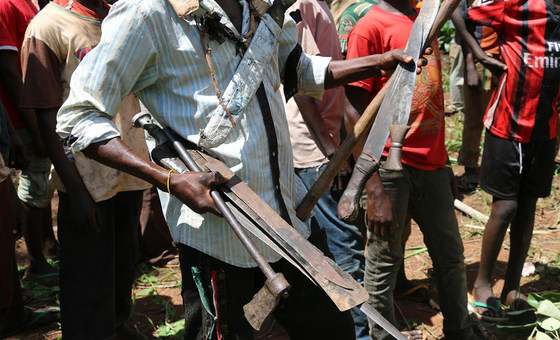
Alfred Yekatom and Patrice-Edouard Ngaïssona received prison sentences of 15 and 12 years for their roles in brutal attacks against civilians – primarily from the country’s mainly Muslim Seleka population – during the 2013-14 civil war.
They were found guilty “beyond any reasonable doubt” of leading and facilitating attacks on civilians in the capital, Bangui, and the country’s west.
Thousands of people were killed in the violence that swept CAR following a 2012 coup led by the mainly Muslim rebel coalition, Séléka. The fighting took on a deeply sectarian tenor as Anti-Balaka militia started a brutal campaign of reprisal attacks.
Long list of crimes
The ICC’s Trial Chamber V found Mr. Yekatom responsible for a number of crimes he committed in the context of the attack on Bangui (the capital of CAR), the events at Yamwara (a school where he had established a base), and during the advance of his group on the PK9-Mbaïki axis.
These included murder, torture, forcible transfer and deportation, directing an attack against a building dedicated to religion and persecution.
Mr. Ngaïssona was convicted for aiding and abetting many of the same crimes, including persecution, forcible displacement and cruel treatment.
Both men were also found to have targeted Muslims based on the Anti-Balaka’s perception of collective guilt for Seleka abuses.
The judges sentenced Mr. Yekatom to 15 years and Mr. Ngaïssona to 12 years, with time already served to be deducted.
Charges of war crimes of pillaging and directing an attack against a religious building during the attack on Bossangoa were not upheld against Mr. Ngaïssona, and those of conscription, enlistment and use of children were not upheld against Mr. Yekatom.
‘Instrumentalization of religion’
The Chamber noted that while religion was instrumentalised by armed groups during the conflict, the violence was not initially religious in nature.
Many witnesses testified that Muslims and Christians had lived peacefully together prior to the conflict.
The convictions mark the conclusion of a trial that began in February 2021. Over the course of proceedings, the Prosecution called 114 witnesses, while the Defense teams called 56. A total of 1,965 victims participated in the trial through legal representatives.
More from Leadership Profiles Desk

Qatar’s 2030 Strategy Puts Productivity at Centre
Qatar’s next development phase is focused less on headline expansion and more on productivity, diversification and private-sector capability.
Oman Vision 2040 Seeks Quieter Path to Integration
Oman’s long-term reform agenda is drawing attention as a measured model of diversification, logistics and regional connectivity.

Synthetic drug market disrupted in Syria after regime change
Captagon, a highly addictive stimulant, has been circulating illegally from the Middle East to Africa and back with…