
Ukraine: Increasing hostilities displace civilians, limit humanitarian access
Donetsk, Kherson and Sumy regions sustained the most damage, with several civilians reportedly killed, and many displaced, UN Spokesperson Stéphane Dujarric told reporters at a regular news briefing on Thursday. “Our humanitarian colleagues tell…

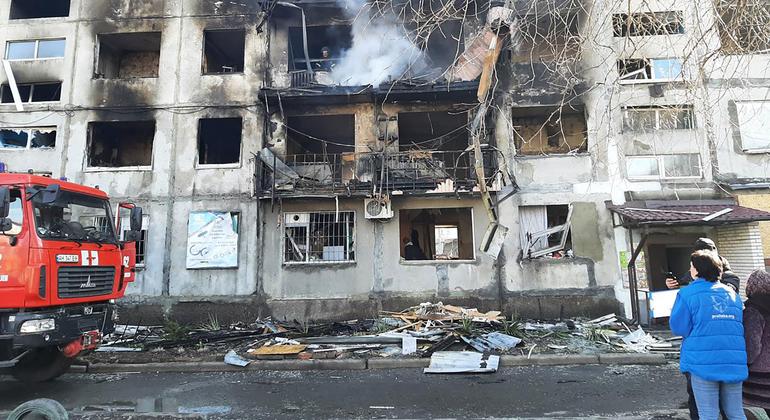
Donetsk, Kherson and Sumy regions sustained the most damage, with several civilians reportedly killed, and many displaced, UN Spokesperson Stéphane Dujarric told reporters at a regular news briefing on Thursday.
“Our humanitarian colleagues tell us that food insecurity remains a concern in front-line and border regions,” he added.
According to a recent assessment by the UN World Food Programme (WFP) and the Food and Agriculture Organization (FAO), the conflict has devastated livelihoods and quadrupled poverty levels, leaving the most vulnerable – particularly displaced people – at greatest risk.
Food insecurity on the front-line
WFP Executive Director Cindy McCain described the challenges.
“This frontline stretches 700 miles and countless towns and villages are still without the basics for survival,” she said.
This has made the work of humanitarians even more vital, with over 400,000 people in Donetsk and Kherson receiving food and agricultural support in addition to cash-based assistance.
In total, over 130 humanitarian organizations have distributed food and livelihood assistance to over 1.8 million people across the country.
Aid challenges
But with hostilities becoming increasingly deadly, humanitarian access remains limited. Since the start of the year, there has been a 50 per cent increase in civilian deaths when compared to the same period last year.
Authorities continue to urge the 10,000 people who remain in the front-line region to evacuate for their own safety.
“For those who stayed or those who came back, there are no jobs, no income and no opportunity,” Ms. McCain said.
More from Geopolitics & Diplomacy Desk

Qatar’s 2030 Strategy Puts Productivity at Centre
Qatar’s next development phase is focused less on headline expansion and more on productivity, diversification and private-sector capability.

Oman Vision 2040 Seeks Quieter Path to Integration
Oman’s long-term reform agenda is drawing attention as a measured model of diversification, logistics and regional connectivity.

Synthetic drug market disrupted in Syria after regime change
Captagon, a highly addictive stimulant, has been circulating illegally from the Middle East to Africa and back with…